

Emma Ruth Rundle is in a buoyant mood at the end of our conversation last Friday evening. The Portland-based multi-disciplinary, speaking passionately about a DIY underground noise show she attended the night before. “It made me feel like it was 20 years ago,” she says. The experience had Rundle asking her self key questions. “What draws us to music? Why do you want to write about music? Why do I want to be doing music? Here was this thing when I remember when I was younger, and I hope that it still exists that you would go to these shows.”
Rundle speaks of the counterculture of the past, when the likes of streaming didn’t even exist. (She speaks glowingly about the Walkman; not so much the CD when I mentioned its mini revival currently taking place here in the U.K.) She continues talking about DIY spaces, where people could converse and get to know one another. “There’s a sense of belonging in that, and having a voice. Getting opportunities to make friends and make art with people in that space,” explains Rundle. In contrast, she acknowledges the other end of the spectrum, namely Live Nation shows where, as Rundle explains, is a “more product-oriented feeling… the humanity is not there.”
Since her days as leader of Nocturnes and Marriages, listening to Emma Ruth Rundle’s work has been amongst the most rewarding out there. Her 2011 experimental-based debut solo release, Electric Guitar: One, the start of something special. Alongside the excellent follow-up, Some Heavy Ocean (2014), both were foundational albums where Rundle intersected tangled folk with the grunge-inspired dirges that would go on to be her hallmark card.
Beginning with the era-defining Marked for Death (2016) and On Dark Horses (2018). Two of finest records committed to tape from any artist from the last 15 years. Rundle’s vision of folk-grunge, a backdrop to her deeply cathartic themes that maintain a spiritual resonance like few others.
Following her wonderful collaboration alongside Thou in 2020, Rundle’s close-to-the-bone narratives continued on the 2021 release, Engine of Hell. It was Rundle’s Nebraska, as she retreated into the shadows to craft a series of skeletal mediations designed for solitude.

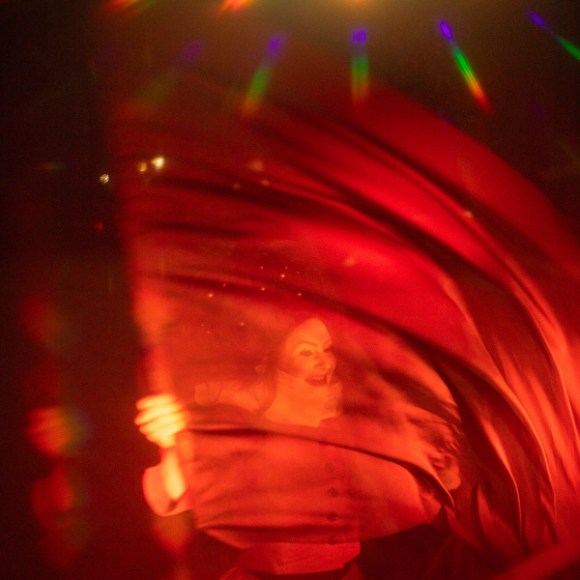
Emma Ruth Rundle (photo: Kristin Cofer)If Engine of Hell felt like a lock-down record in the purest sense of isolation, These Killing Times is a reaction to it. Despite the harrowing themes that underpin the album, it’s as much a celebration of community. Rundle, joined by a plethora of guests, including Jess Gowrie (drums), Troy Zeigler (bass), Nick Reinhart (guitar) and many more.
An Emma Ruth Rundle release is never immediate. You have to submit to it, and These Killing Times is no different. As its title suggests, the compositional doom-grunge of Powerless almost crumbles under the weight of despair. (“Let me die here with a hammer in my hand / One for smashing/ One for making something better”).
Then there’s the dynamic God’s Picture – a song destined to leave indelible marks on the soul. And in time, it may be one of Rundle’s best. So too the beguiling Enough. Both songs, featuring saxophonist, Patrick Shiroishi. His work on Enough, guiding Rundle to new corners with a free-jazz-inspired cacophony of noise.
“Patrick is a real friend. I have the utmost reverence for him as an artist,” says Rundle, the pair having met years ago in Los Angeles. “Specifically, the second verse of God’s Picture I left instrumental, hoping that Patrick would be available to play some saxophone there.”
Elsewhere, and the deep, rich echoes of Anvil find Rundle giving one of her most bewitching performances. Her voice, soaring through the clouds, which is where she remains on Catherine Wheel. Taking its cues from Powerless, the song is blistering, noise-to-the-sky euphoria in the face of the adversity.
There are more hushed passages, too. Don’t Delay Heaven, a tender, slow burner that Rundle has always possessed in her arsenal. Oceans of Time is of the same ilk, too. The beautiful closer, rounding out the album perfectly.
Not before Human Kindness. A song that embodies the community that Rundle spoke of in the lead-up to These Killing Times’ release. Despite the song’s dominance of dark, low-slung guitars, there’s a get-to-know-your-neighbour spirit to it. Rundle, attempting to demystify the world’s ills, little by little. “I think being nice… there’s a lady’s coming down the street. She’s this elderly woman who’s carrying too much stuff. I can go help her. We got to do that,” says Rundle.
And we do, of course. Sticking together, paramount during these precarious times. “I think the bottom line is that human beings are like connection animals, and that’s not going to change,” says Rundle. “No matter what is foisted upon us, we will have a sense of something amiss. Not only because we’re facing an existential crisis globally and we’re living through what they’re calling the Anthropocene, but we are wired to be connected. So one way or another, I do it through music.”
While These Killing Times is a clarion call, there’s an alchemy to it unlike any of Rundle’s previous works. And while she captures some of the same energy and fragile emotional intensity of Engine of Hell, once again Rundle emphatically smashes folk into grunge. The results, devasting. These Killing Times, another triumph from one of the most crucial voices of our generation.

Emma Ruth Rundle (photo: Kristin Cofer)Sun 13: You now have such a broad body of work. Are you someone who thinks about their past recordings, or do you tend to look forward?
Emma Ruth Rundle: “I have an awareness of my past recordings. I think as anyone who continues to tour and perform, there are some songs that people really love, and I like to play those songs for them. But I consider sometimes when I’m working on a new record, things from the past, do I still feel connected to [them], and what was artistically successful for me? Not in a commercial sense, but, like, ‘I really loved this guitar tone’, or ‘I enjoyed playing with this person’, or ‘What did I like about how the drums acted on this record’. I think about that type of stuff, but I don’t go back and listen to old records.”
S13: Following Marked for Death, I remember seeing a short film when you lived in Louisville. You spoke about working on music every day and not believing in writers’ block. Firstly, do you still write every day, and secondly do you still feel the same way about writers’ block?
ERR: “I don’t write music every day and, in fact, I do feel that there are periods where the field is fallow. That sometimes is the natural result of having put so much effort into a project – like this record that I’ve just made – where there isn’t really much left. The well is empty, which is part of the reason why I have so many different practices. I don’t feel tapped out when it comes to painting, or then that’s a good time to go and be reading or listening or spending time with other people, or whatever it is that you need to reconnect yourself to some sort of vitality.
“I’m not actively trying to write at this moment. I think it’s important. Now that I’m 42, there will be periods where this does happen. I do believe in writer’s block. I guess it’s not writer’s block, but there are certainly periods where you feel less connected to whatever the muse or the source is. Plenty of people have written books about it. But I think part of what I was trying to get at is that there are seasons for a reason. And that now I understand that it’s as important not to be trying to constantly be making something. It’s okay to have these fallow times in your creative practice.”
S13: You often reference the ocean in your work, including on These Killing Times. Is it a central figure in your life as artist?
ERR: “I never really thought about that before. But I think the ocean is a pretty timeless subject. It’s such a vast expanse of water, and water is tied to emotion and depth. I was born just a few blocks from the ocean, and I did grow up visiting the ocean quite a lot. I didn’t really ever connect that as being central to my work. But I guess it is a theme that appears a lot, and I don’t think that’s unique to me. People use the ocean as inspiration or metaphor because it’s just one of those human things we think about.”
S13: Talking about your past, do you remember the first artist that made you want to be an artist yourself?
ERR: “When I was really little, there was this record called the Renaissance of the Celtic Harp by Alan Stivell. I loved listening to this record so much; it like totally transported me as a kid. It was immersive in a way that I wanted to get into that space and be in that magical realm and hear it as much as possible. And of course, the next thing you want is to try to do it, so that you can get in there any time and figure out what is the magic there. Like, how do you conjure this beauty? And that’s why I started playing music. The harp was the first instrument I played. I would never ever want to play harp in front of anyone, because I’m not good at it.” (laughs)
S13: When you began writing These Killing Times, was it clear that you wanted a more band-orientated record after Engine of Hell?
ERR: “I think that the emotions and the subject matter, the content of the record is best served with the energy of a full band. You have the quality of drums, the quality of amplified guitars. And also, I often like to do things in almost a reactionary way to what I had done before, and part of that comes from how you live in something while you’re touring, which is years on the road. I was quite isolated and living in this monastic way doing Engine of Hell. Which was really great, and on a personal level was what I needed at the time.
“But in the context of this moment we’re living in, I don’t want to be by myself. So it’s twofold. The content of the album is best served with a band. And personally, I don’t want to be alone right now. I want to be in a group and a camaraderie and have connection and community and friendship as we go out into the world and play this record.”
Emma Ruth Rundle - These Killing TimesS13: What did you aim to capture with These Killing Times, and does this change with each record?
ERR: “Each record is very different. I have some records that are improvisational, and they’re about capturing a moment, whereas records like Engine of Hell or These Killing Times are different in the sense that they’re composed and written over a period of time, so there’s a lot more craft and thought that goes into them. You write a lot. A lot of the songs will end up in the trash, and then we recorded some songs that didn’t end up on the record. It’s clear by the time you’ve recorded everything that you know what to go into it with.
“I often go into a record with a song or two that I have written that I consider the cornerstone of the record… like a thesis kind of song. For me, that was God’s Picture on this record, and so some of the songs that we did record just didn’t fit into the essay. They’re cool songs, but they didn’t contribute to the to the overall vision of the album.”
S13: God’s Picture is a really interesting song, because I think that Powerless is like a quintessential opener. It feels like one of your most politically-charged songs so far, and because it also encompasses the album.
ERR: “There are actually two orders. There’s the digital order, and then there’s the vinyl order. Powerless, we decided as the opener on the digital version, which was the last song I wrote for this record. It is a politically charged song. I mean, the whole record is politically charged. God’s Picture is the first song on the vinyl.”
S13: Wow, that’s interesting. On God’s Picture, I like the perspective that the protagonist is coming from. Is religion something you’ve explored beyond your art?
ERR: “I do use religious themes as for allegory. The reason for that is in the Western world, Christianity is inextricably linked to our culture, and it is the backdrop of the Western world, whether we like it or not. Human beings needing story as they do in mythology, it’s just the easiest one to reference. It’s pervasive. I was not raised in the church. I’m not religious, but it’s an easy set of stories to reach to, to speak to broader ideas.”
S13: Do you write the music before your lyrics, or is it the other way around?
ERR: “I write the music first. The music is foundational, but the lyrics… some little phrases or words will come through as I’m writing the music, and then I have to refine what it is that I’m trying to say lyrically over time.”
S13: You spoke of composition, which I think is relevant to your recent work. There are little fragments that form. For instance, the opening piano line on Powerless could have been the catalyst to that song. Do you work outwards like that?
ERR: “Some of it. Except for the last one, all of these songs were primarily written on guitar. Like the piano part in Powerless, which I really do love. We had a very limited day in the studio to add piano, and so that was not something I composed before going into the studio. It was like, ‘Oh, do we want to add piano to Powerless’, and then I came up with that repetitive descending line.
“That was one thing that I did like about this record and this experience; I had more time in the studio than before. It was nice to leave room for things to happen, and for other people to come in and add things. We developed the basic tracks and the foundation of the songs and the structures, and then left space for others to come in. But the piano in that song was a very happy accident.”
S13: You speak of other people on the record. Jess Gowrie’s work really underpins a lot of the sound.
ERR: “Absolutely. I love working with Jess. She’s so cool. We are the same age, and we grew up listening to the same music, so it’s really easy to talk about references and just get it. We had a lot of fun spending time together because Jess and I worked together most on this. Over a year ago, she started coming up to visit and playing, or I’d go to her place in Sacramento, and we’d practice and play during the day, and then at night we just watched ’90s music videos. It was great.”

Emma Ruth Rundle (photo: Kristin Cofer)S13: The record is on your own label. Do you think that gave you a new sense of freedom?
ERR: “It’s something I’ve always wanted to do but was unsure of my ability to do. It did give me a new sense of freedom. I really got to do pretty much whatever I wanted, within reason. I’m not a rich person by any means. I don’t have tens of thousands of dollars to spend on extravagant recording sessions. But I had no one naysaying any of my ideas, and for that reason, was able to have a lot of freedom. There’s a joy that comes from being able to be free in that way.”
S13: Do you believe that songs can be connected to each other? For instance, one could interpret Don’t Delay Heaven and Real Big Sky being pretty close to each other…
ERR: “I think that there is. I definitely write in certain tones and themes that repeat. I think songs are connected, and even on the album I tried to connect. There were just certain things I was thinking about; like the metaphor of the wheel, and that appears several times on the album. But I think Real Big Sky and Don’t Delay Heaven are both about this transcending pain. The wish for that something beyond the mundane, painful human experience. Just about love… not romantic love, but love between people.”
S13: With your art being so personal, obviously that resonates deeply with your listeners, and a bond through commonality can emerge. Do you speak to fans after shows, or are you a little more reserved than that?
ERR: “It’s complicated. My first instinct is to say I really appreciate my fans. I think that for the most part, they’re very caring, thoughtful, and largely open-minded, deeply feeling people. So yeah, there is a commonality, of course. I’m just a human being, so I write about human experience. I do like to go out and talk to fans after shows. Sometimes I have limitations physically. For instance, one tour two years ago, I lost my voice in the middle of the tour, and so I couldn’t go talk to people anymore. And then every now and then, unfortunately, there will be a person here and there that will cross a line or a boundary, and I don’t feel safe, and I don’t like that because it makes me feel afraid of people.
“But for the most part, my preference is to be able to connect with the fans and think about us all as part of a music community. I love Roadburn where I feel like I can just walk around and hug people on the street (laughs). I’m just a person. I need connection, too, so if my shows are an opportunity for people to feel that with each other or with me, I think it’s cool.
“I think a problem does arise with the idea of any type of idealising or idolising or this concept of celebrity in any way. Which even as an underground artist, and of course as a woman, unfortunately, there are from time to time men who can be a little obsessive or delusional and have an idea about me that isn’t real. So it’s complicated. I have to protect myself and be guarded. I certainly don’t want my address out on the internet, but I do want to make myself available to people where I have capacity to physically and mentally, where I’m able. That is something I think is good to do.”
S13: Human Kindness feels like the through-line on the album in many ways. Do you think community is the last line of defence in these dire times?
ERR: “I do. Speaking for myself, I’m an introverted person. I feel out of place, and just awkward sometimes, and I have a tendency to want to isolate. I think that the capitalist society we live in does best when we’re all disconnected from each other and just looking through a screen to whatever, and so I have to really work hard to resist that urge. Knowing by experience that I tend to feel better when not plagued by my own thoughts and by internal dialogue which tends to be very negative, that is relieved when I’m in the company of others. And even not that deep. Living in the neighbourhood where I live now, I’ve never got to know my neighbours. But now I do, and we all share food. We haven’t reached the stage where we’re plotting the downfall of empire yet, but maybe that will come.”
These Killing Times is out via Errant Child. Purchase from Bandcamp.
